Introduction
Over the last ten years, marketing has changed greatly as a result of rapid technological progress and shifts in the way consumers behave. Nowadays, consumers are more connected, informed, and selective than at any time in the past. They are able to find products on social media, check prices on the internet, read reviews, watch videos, and communicate directly with brands all before making a purchase.
Consequently, marketing is not confined to television, newspapers, radio, or billboards any more. In order to succeed nowadays, companies have to use digital platforms, adopt data-driven strategies, offer personalised experiences, provide valuable content, and establish strong customer relationships. Today’s marketing consists of reaching the correct audience, adding value, building trust, and guiding customers along their buying journey.
The Rise of Digital Marketing
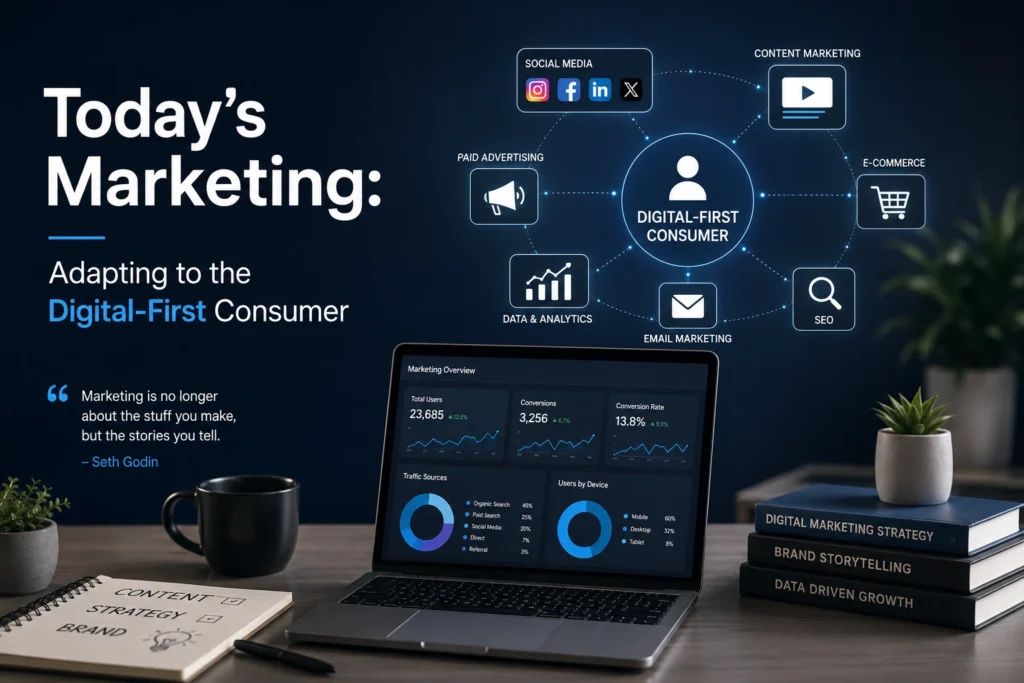
Digital marketing is now a major factor in the way modern businesses achieve growth. Consumers spend a great deal of time using search engines, social media, websites, email, and mobile applications. The various platforms offer businesses the chance to target specific audiences according to their interests, behaviour, demographic characteristics, and location.
Businesses can more effectively communicate with potential customers through the use of search engine optimization (SEO), search engine marketing (SEM), social media marketing, email marketing, content marketing, and online advertising.
A major benefit of digital marketing is that it is measurable. It is possible to monitor website traffic, engagement, leads, conversions, and the performance of campaigns. The information obtained allows companies to see what is working and to make improved marketing decisions.
Customer-Centric Marketing
The marketing carried out today places a strong emphasis on the customer. It is no longer enough just to promote products; businesses must come to know their customers’ problems, expectations, interests, and the way they behave when making purchases.
A strategy that is customer-focused raises several important questions: What are the customer’s needs? What problem are they attempting to solve? What information do they require before making a purchase? On which platforms do they use them?
If businesses understand these factors they can then produce messages and experiences that are relevant. Customers are more likely to engage with a brand and become loyal over the long term when they feel that they have been understood.
Personalization Is the Key to Success
People now expect personalised experiences, and companies can make use of customer data and their online behaviour to give out relevant content, recommendations, and offers.
For instance, an e-commerce website can make product recommendations on the basis of past purchases or the websites that have been browsed. In a similar way, email campaigns can be tailored to match customer interests.
Personalization has the advantage of increasing engagement and customer satisfaction; yet companies must use customer information responsibly and make it clear how data is collected and used.
The Power of Social Media Marketing
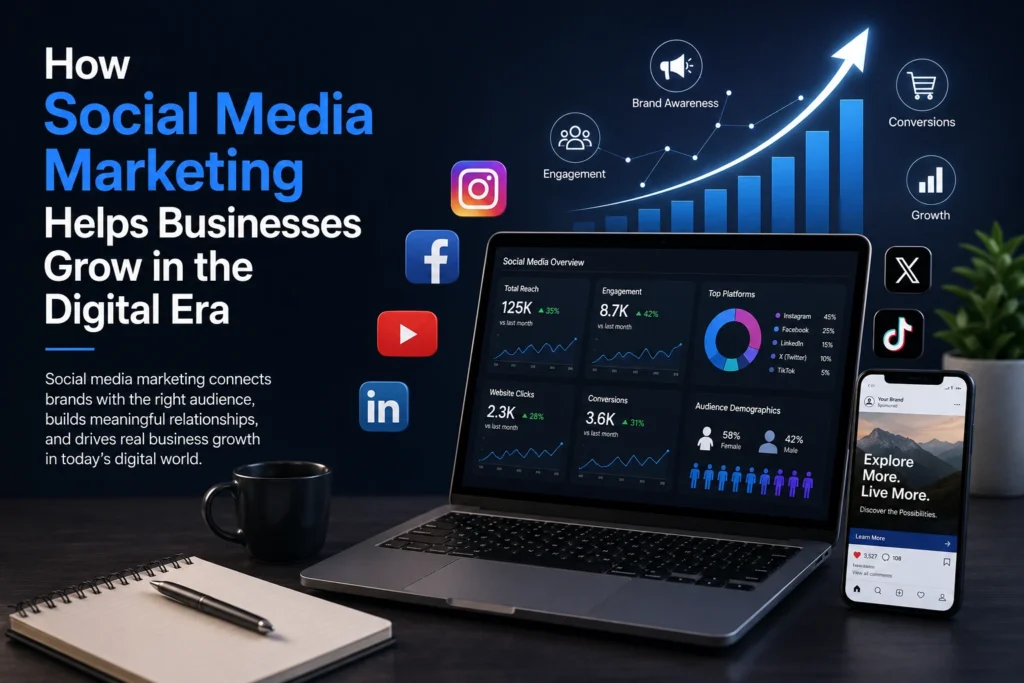
Social media has changed the way businesses communicate with their customers. Nowadays, companies can form communities and get in direct contact with their audiences through platforms like Instagram, Facebook, LinkedIn, TikTok, and YouTube.
Businesses make use of social media in order to boost their brand awareness, give customers information, display their products, respond to questions, gather feedback, and obtain leads.
Short-form videos, reels, live streams, educational posts, and user-generated content have all become important ways of attracting attention, so social media is no longer merely an advertising channel; it has also become a platform for building relationships.
Content Marketing Builds Trust
Content marketing is about giving an audience useful and valuable information, and blogs, videos, podcasts, guides, infographics, newsletters, and case studies all help companies to show their expertise.
For instance, a real estate company could produce content on home-buying advice, mistakes to avoid when investing in property, and the various factors that should be taken into account before buying a house. The content offers value at the same time as establishing the business as a knowledgeable source.
Content that is consistent and of high quality can also help improve search visibility, draw in organic traffic, and ensure that customers remain connected with the brand.
The Growth of Video Marketing
Video is now one of the most engaging types of digital content and companies can use it to show their products, explain their services, respond to questions, publish testimonials, and share the stories of their brand.
Short-form videos are especially useful for grabbing people’s attention at once, but longer educational videos too can assist businesses in explaining complicated subjects and establishing their authority.
A good video strategy should be based on offering value rather than just promoting a product.
Artificial Intelligence and Automation
Artificial intelligence is today having a major impact on marketing by enabling companies to work more efficiently. Tools driven by AI can assist with coming up with content ideas, dividing customers into segments, carrying out data analysis, using predictive analytics, providing chatbot services, and improving campaigns.
Marketing automation is also capable of dealing with routine tasks such as email sequences, social media scheduling, and the nurturing of leads.
AI should instead support human creativity and strategic thinking rather than entirely replace it, and authenticity, storytelling, emotional understanding, and creative decision-making should still be important for successful marketing.
Data-Driven Marketing
Data has now become a vital basis for marketing decisions; rather than depending completely on assumptions, companies can make use of performance data in order to find out what their customers respond to.
Important marketing metrics are website traffic, engagement rate, conversion rate, customer acquisition cost, return on advertising spend, click-through rate, and lead generation.
By examining these metrics businesses are able to spot which of their campaigns have been successful, improve their weak points, and make more effective use of their marketing budgets.
Omnichannel Marketing and Customer Experience
Customers frequently interact with companies on a number of different platforms. For example, a customer might first come across a brand on Instagram, then look for its website on Google, read the online reviews, and finally make the purchase via the website.
The objective of omnichannel marketing is to ensure a consistent experience when interacting through these various touchpoints, with branding, messaging, communication, and customer service all needing to stay consistent across different platforms.
Customer experience is just as important; quick communication, simple purchasing procedures, helpful support, and personal follow-ups can lead to customers making purchases again and giving positive recommendations.
The Importance of Trust and Privacy
People today are more and more worried about the way businesses use their personal information, and it is necessary for companies to deal with customers’ data responsibly and to make clear communications regarding their privacy practices.
Trust can act as a competitive advantage; companies which respect customers’ privacy and communicate honestly are more likely to establish stronger long-term relationships.
Frequently Asked Questions
- What does modern marketing consist of ?
Modern marketing is an approach which centres on the customer and involves the use of digital platforms, technology, data, content, personalisation, and conventional marketing methods in order to reach and engage audiences.
- Why is digital marketing important ?
Digital marketing allows companies to reach specific audiences, measure their results, communicate directly with customers, and adjust their campaigns in light of performance data.
- What are the primary digital marketing channels ?
The major ones are SEO, SEM, social media marketing, email marketing, content marketing, websites, video marketing, influencer marketing, and online advertising.
- In what way does personalization enhance marketing ?
Because of personalization businesses are able to give customers content, recommendations, and offers which are more relevant to them. This in turn leads to greater engagement and better customer relationships.
- What is the importance of content marketing ?
Content marketing enables companies to educate their audiences, show off their expertise, build up trust, draw in organic traffic, and assist customers at every stage of the purchasing process.
- How is AI changing marketing ?
AI is changing marketing in several ways. It helps companies understand customers better by looking at data and spotting patterns. Marketers use AI to predict what people might buy, which helps them create more personal ads and offers. AI also saves time by handling simple tasks, like answering questions from customers or sorting emails. It can improve how campaigns run by testing different ideas and showing which ones work best. As a result, businesses can connect with customers more easily and make better choices about where to spend their money.
AI can assist marketers with data analysis, automate routine tasks, enable personalisation of communication, come up with content ideas, improve customer support, and optimise campaigns.
- Is social media of any use to small businesses ?
Certainly. Social media can assist small businesses in increasing their visibility, in allowing them to communicate directly with customers, in displaying their products and services, and in establishing a loyal online community.
- What is data-driven marketing ?
Data-driven marketing is a way of using information from customers and markets to guide marketing choices. Companies collect and look at data to better understand what people want. This helps them target ads, choose the right channels, and improve campaigns for better results.
Data-driven marketing means using data on customers and campaigns in order to understand behaviour, measure the results, identify opportunities, and make informed decisions.
9. What does customer-centric marketing entail ?
Marketing which is customer-centric involves understanding what customers need and then developing products, content, communication, and experiences that offer real value.
10. What will happen to marketing in the future ?
AI, automation, personalization, video, data analytics, social commerce, and omnichannel experiences will all play a greater role in the future of marketing. Yet creativity, authenticity, trust, and customer relationships will continue to be essential.
Conclusion
Marketing today is dynamic, based on technology, focused on data, and puts the customer at its heart. Companies can no longer rely just on traditional advertising or merely promote their products; they have to understand their audiences, produce useful content, make effective use of digital platforms, and ensure that they provide positive customer experiences.
Technology offers powerful tools for reaching and for understanding customers, and data enables marketers to make better decisions. Yet successful marketing still requires creativity, authenticity, trust, and meaningful communication.
Businesses that keep on adapting to changing consumer expectations and to new technologies will be in a better position to establish strong brands, draw in customers, and reach sustainable growth in today’s digital-first marketplace.